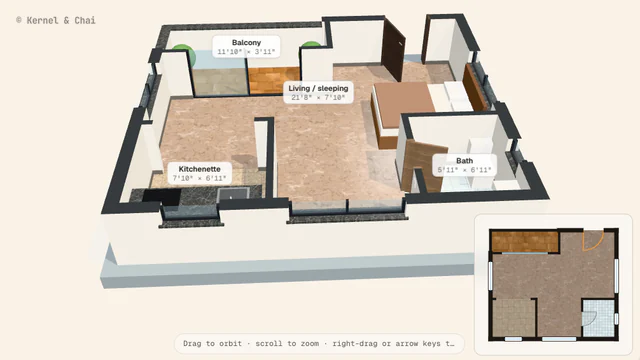
A civil engineer checks two AIs' Taj Mahal
Two AI coding tools got the same brief, in empty folders, and built the Taj Mahal from code. I measured what they built against the published sizes.
I’m a civil engineer. When someone hands me a model, I don’t ask if it looks nice. I ask how wide the dome is, and who says so. So I gave two AI coding tools the same brief, in empty folders, and checked their work. You can load both builds and drive them with the same cameras on the lab page.
What I asked for
Both tools got the same text: a spec and a brief. Codex received it as one message, Claude as two. Build the Taj Mahal in Three.js from code. Research the real dimensions yourself, cite every source, and say where sources disagree. Then review your own screenshots against the real Taj and fix the three biggest differences, four rounds in all.
Each one started fresh, in an empty folder, with web search on. I didn’t touch the code. Claude asked one question, where to build, and I picked the option it recommended. Codex asked nothing. The spec and the brief, word for word, are on the lab page.
What came back
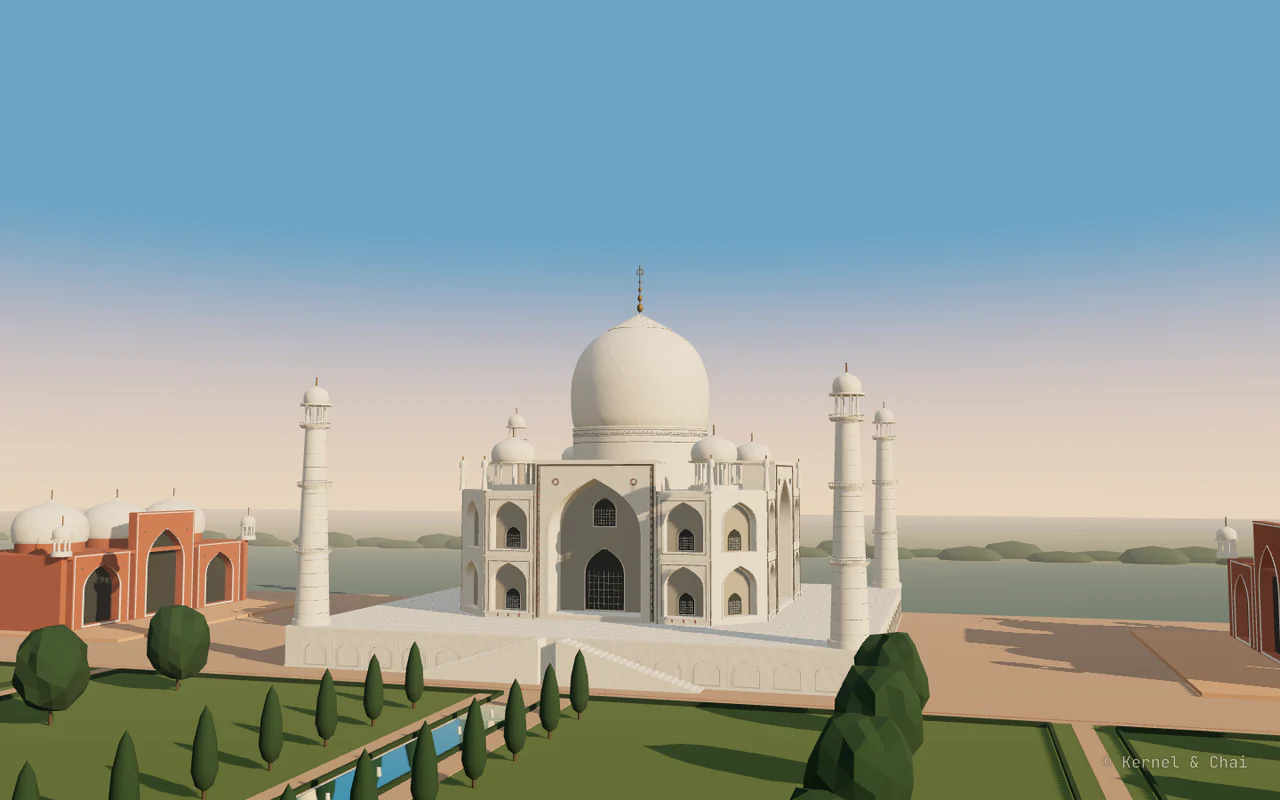
Codex: a bright, crisp model with deep arched niches, jali screens in the windows and a river behind the tomb. The light is closer to a clear morning than a sunrise.
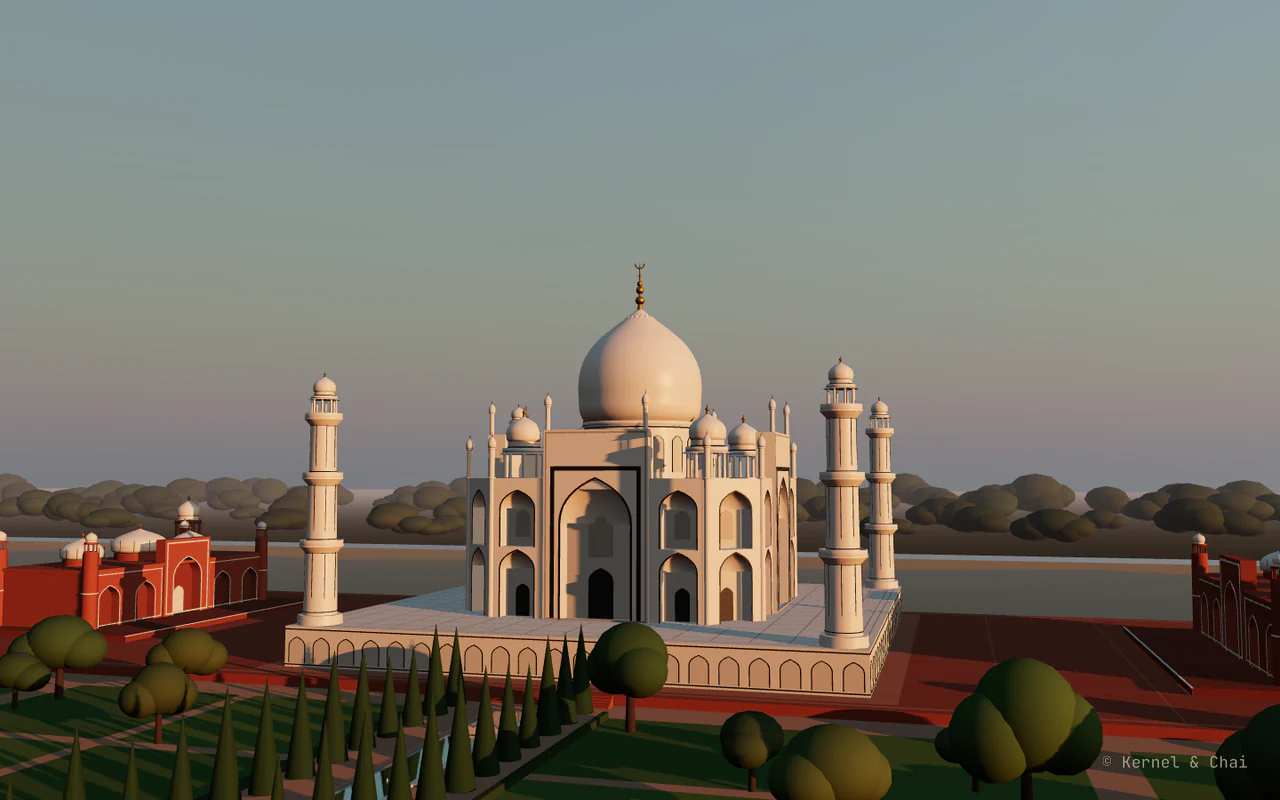
Claude: a warm sunrise, a tree line across the river and long shadows on the plinth. The facade has deep iwans with half-dome hoods. Its dome is the slimmer of the two.
How I checked
I didn’t judge the pictures. I measured the models. Both builds report their sizes from their own geometry, not from a settings file. I re-measured both on my machine with the same four cameras and the same renderer. All 22 numbers matched what the two builds reported about themselves.
Then I compared each size with published sources: the Archaeological Survey of India (ASI), which runs the site, and peer-reviewed papers. I score a size only when the sources agree on both the number and what it measures. Everything else I show, but I don’t score.
I also looked at where each tool got its numbers. Codex cited the official ASI site and a structural study of the dome for almost everything. Claude cited Wikipedia most often, plus a survey paper and a few popular sites.
The 17.6 m dome that isn’t
One reference I started from gave the dome’s width as 17.6 m. On my first try at this study, a build came out at twice that, and I thought it had got the dome badly wrong. Then I read the ASI page. It gives a dome “58 feet in diameter”, which is 17.68 m. But that is the inner dome, the ceiling you see from inside. The white onion you see from the garden is the outer one, and it is much wider.
In the fair run, both tools worked this out on their own. Both built two shells, and both made the inner dome 17.7 m. The outer dome is harder. A structural study gives about 26.9 m at its widest, and a paper that measured a photograph gets 33.6 m.
- Codex: 27.5 m
- Claude: 24.6 m
- Outer dome, sources: 26.88 m (Rihal et al. 2021, structural study) to 33.62 m (Ahuja and Rajani 2016, from a photograph)
- Inner dome: 17.68 m (ASI, 58 ft)
In Three.js a dome is one curve, turned 360° by a “lathe”, like a potter’s wheel. Change one number, the radius, and the whole dome gets wider. The lab page has a slider for it.
The rest of the audit
Five sizes tell most of the story. Each card shows the source value or range, and where each build landed.
-
Plinth side
scoredCodex 95.65 m. Claude 95.69 m. Sources: 95.4 m (ASI, Outlying Buildings), 95.69 m (Balasubramaniam 2009).
95.4 m ASI, Outlying Buildings · 95.69 m Balasubramaniam 2009
ASI gives 313 feet, 95.40 m, and a survey measured 95.69 m. Both builds sit between them: Codex 95.65 m, Claude 95.69 m.
-
Plinth height
scoredCodex 6.71 m. Claude 6.7 m. Sources: 6.71 m (ASI, Outlying Buildings).
6.71 m ASI, Outlying Buildings
ASI gives 22 feet, 6.71 m. Both builds match it: Codex 6.71 m, Claude 6.7 m.
-
Minaret height
disputedCodex 41.76 m. Claude 43.02 m. Sources: 39.62 m (ASI, The Taj Exteriors), 41.76 m (ASI, Outlying Buildings).
39.62 m ASI, The Taj Exteriors · 41.76 m ASI, Outlying Buildings
ASI gives two figures on two pages, from "more than 130 feet" to 137 feet. Codex used exactly 137 feet, 41.76 m. Claude used 43.02 m, a survey figure via Wikipedia. Not scored.
-
Drum height
disputedCodex 12 m. Claude 12 m. Sources: 7.01 m (ASI, The Taj Exteriors).
7.01 m ASI, The Taj Exteriors
Here both builds agree with each other and disagree with ASI. ASI says the drum is "roughly 23 feet", about 7 m. Both built 12 m. Codex chose it by eye and flagged the conflict. Claude took it from Wikipedia. ASI says "roughly" and doesn't say where it measures from, so I don't score it. But when two AIs agree, it's worth checking whether they agree with the source.
-
Reflecting pool
no sourceCodex 115 m. Claude 120 m. No source.
no source value
I found no source I trust. Codex built 115 m and Claude 120 m. On my first try, the two builds made it 130 m and 282 m, so the brief made a difference.
The full audit, with every row and every source, is on the lab page.
How each one worked
Codex ran in its command-line tool and worked through all four rounds by itself. Its sources file reads like an engineer’s: almost every value points to the ASI site or a peer-reviewed study. Claude ran in a chat with an empty folder from my Mac attached, and also worked through all four rounds by itself. Its self-audit is the most useful part: for every size it shows the published range and says how solid its own number is.
Same brief, same folders, same cameras, no human edits. I still name no winner: they made different, defensible choices, and the open rows need better sources, not a verdict.
Before this fair run, I tried a looser version, in conversations that already had reference sizes. Those first builds taught me what to ask for. You can still load them, and watch both orbits, on the lab page.
What I’d check next
Three rows are still open: the outer dome, the drum and the total height. Ebba Koch’s book “The Complete Taj Mahal” has a survey of every major size, and the Archnet page needs a manual check in a browser. When I’ve done both, I’ll update the audit here and say what changed.
If you’ve stood in front of the Taj, which detail would you check first?