
lab · 3d study · the engineer's maths
Flying car, or a jump-and-flip machine?
Tesla calls its new Roadster a flying car. I took Tesla's own numbers and counted the seconds of gas.
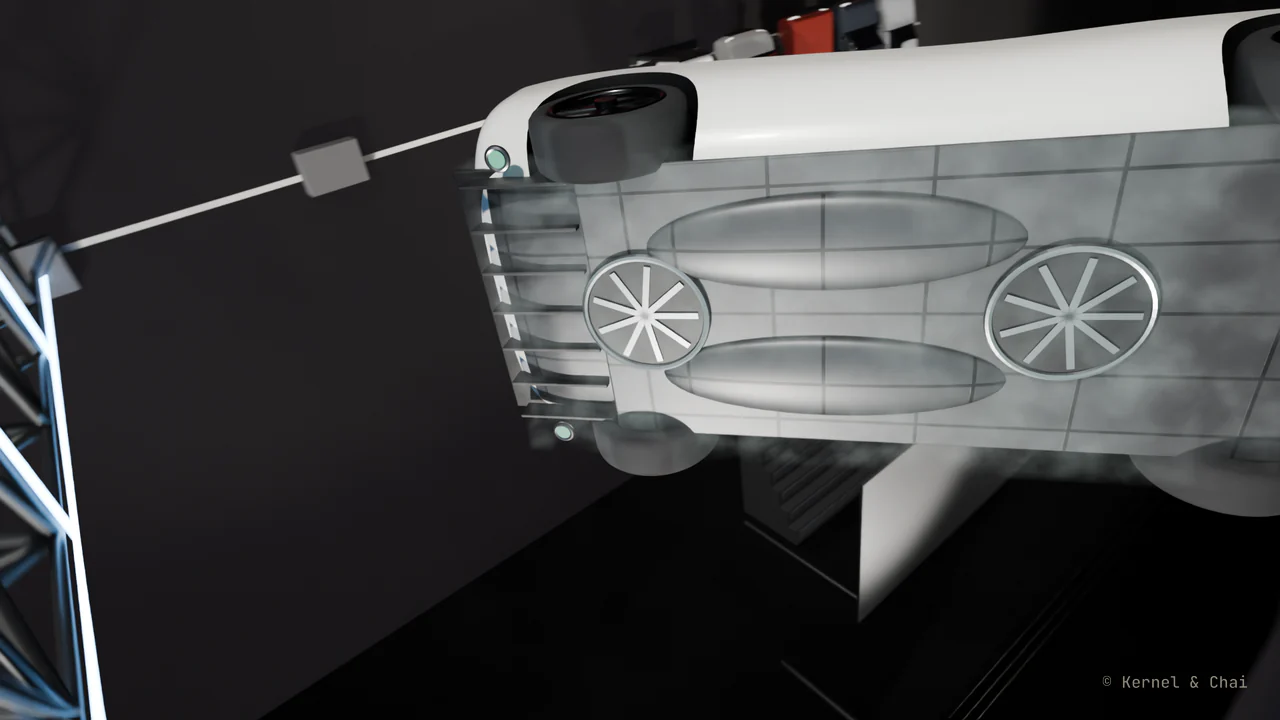
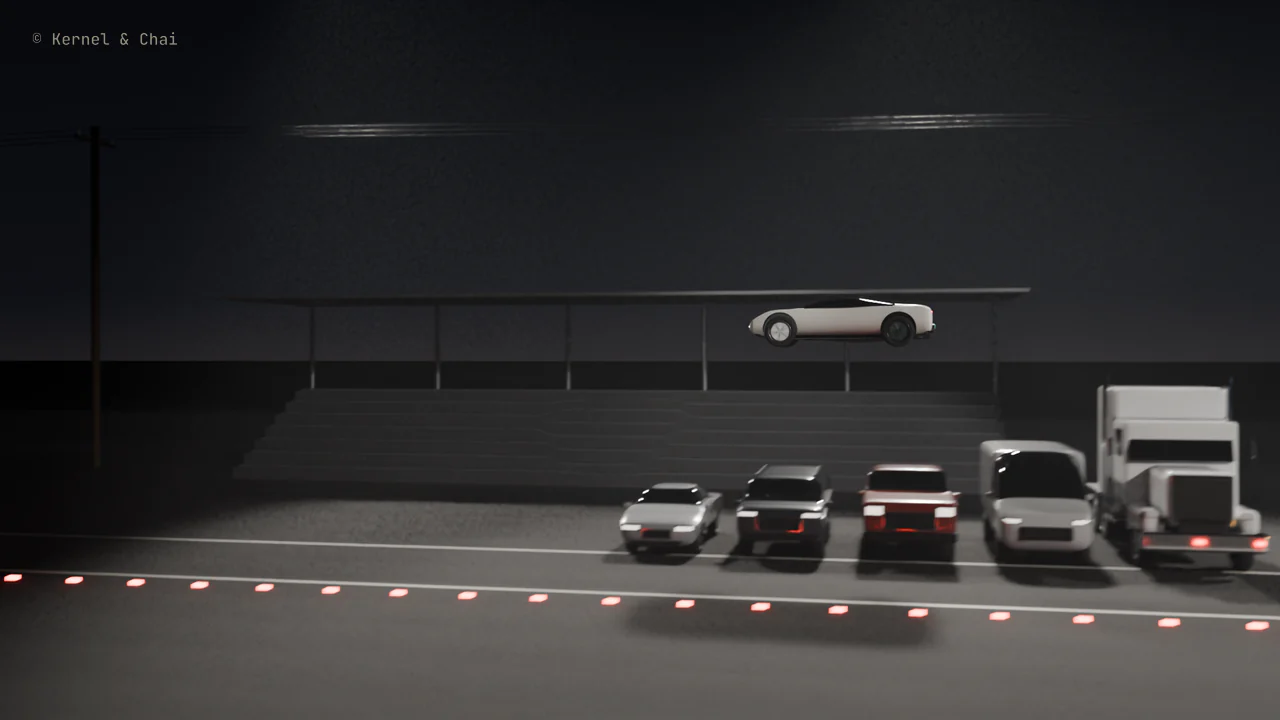
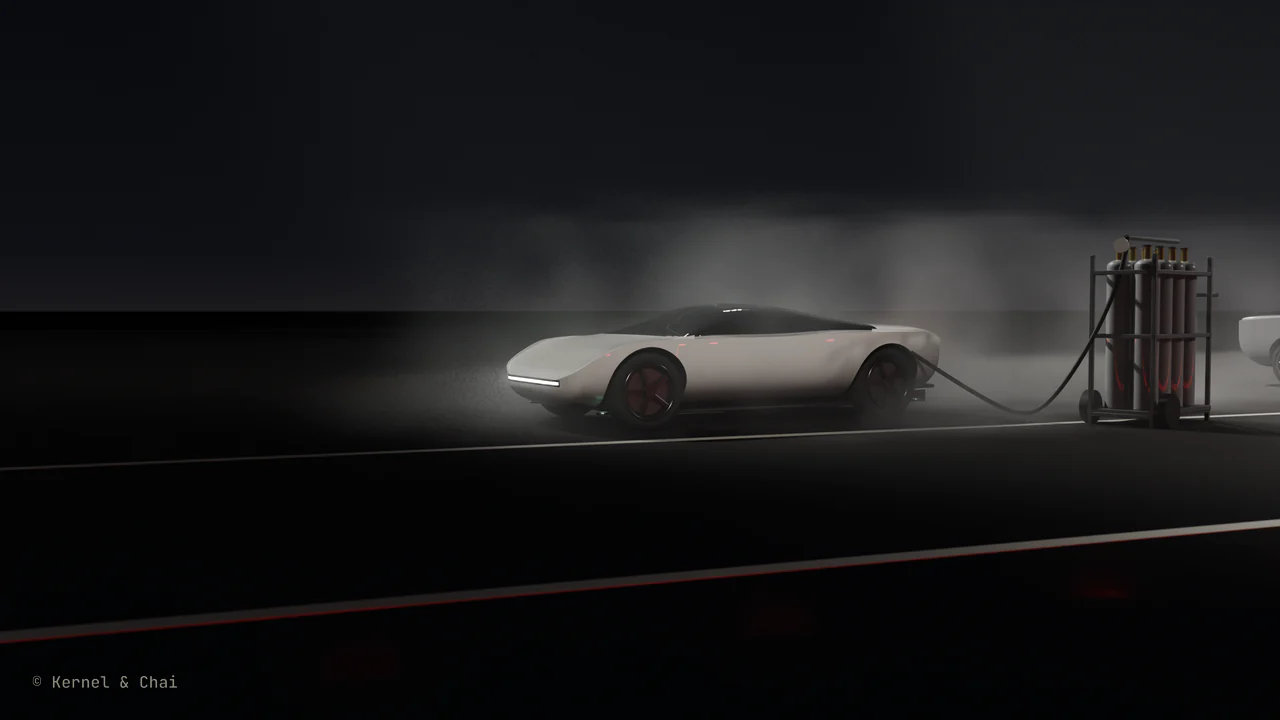
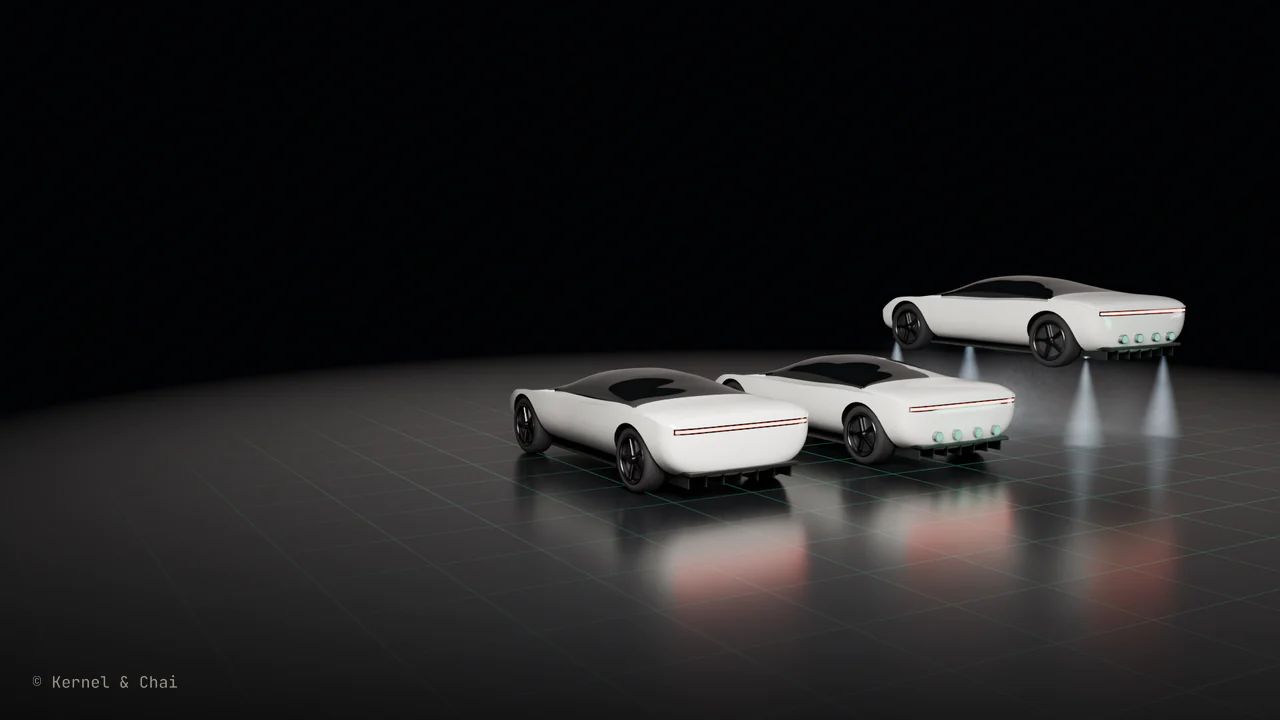
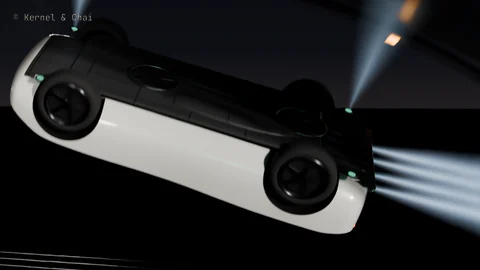
Illustration: my own generic car, rendered in Blender, not Tesla footage. Renders and video © Kernel & Chai, all rights reserved. Rights
- of gas at full power
- ≈ 2 s
- Our estimate
- best-case hover
- ≈ 10 s
- Our estimate
- of the tank per 27 ft jump
- ≈ 1/5
- Our estimate
Our estimates use Tesla's figures and the assumptions listed under Sources. Tap a number's source to check it.
01 · the demo
What Tesla showed
Live, outside Waco, Texas3 . Fans under the car held it to a curved ramp until it hung upside down. Thrusters fired, it flipped, and it landed4 . Then it jumped over five Tesla vehicles3 .
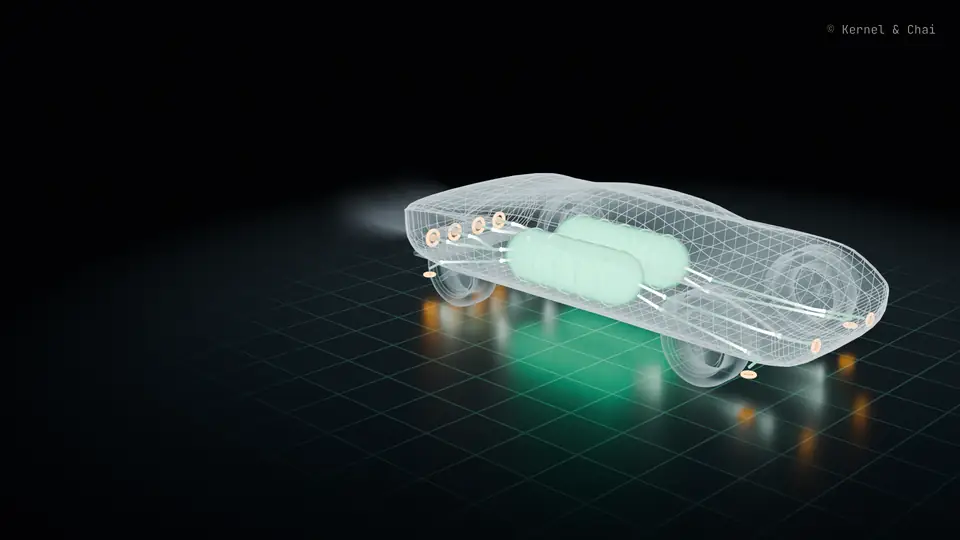
Tesla's claims: 27 ft up5 , 0-60 mph in 0.81 s1 . Two tanks, 600 L, about 250 kg of gas2 , ten nozzles, over 80 kN from the four at the back1 .
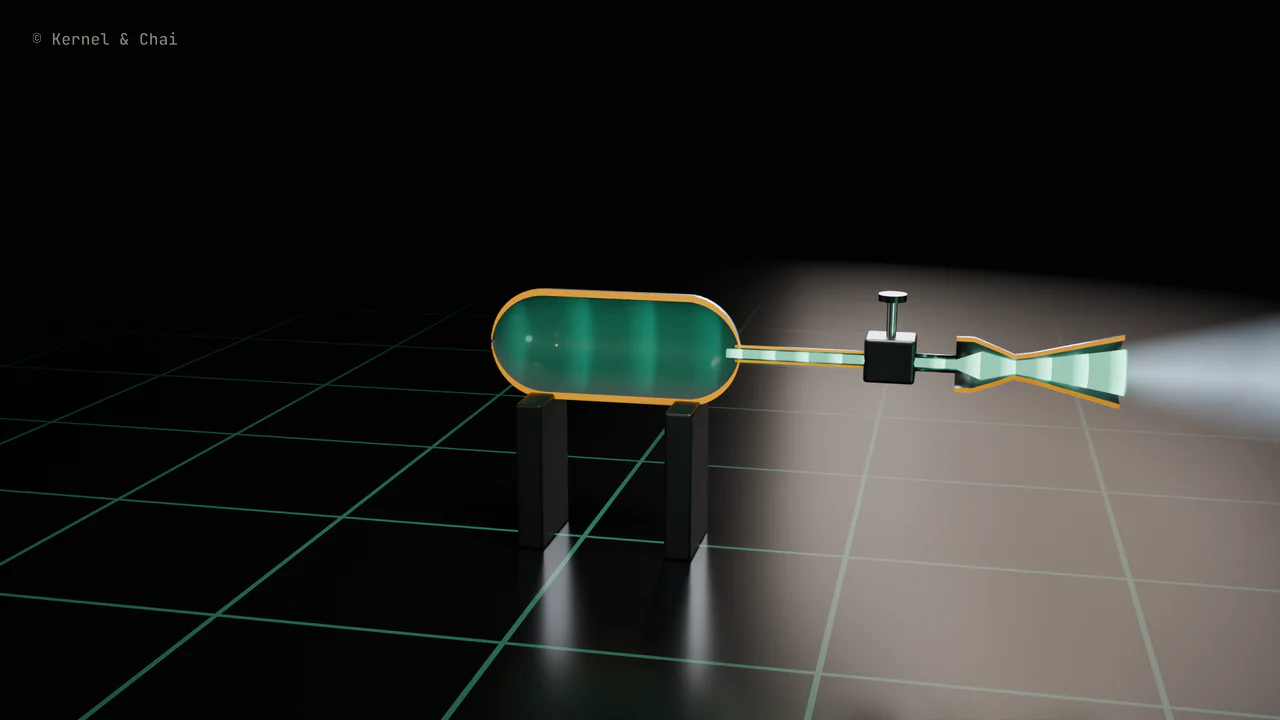
The thrusters are cold gas: nothing burns, squeezed gas just rushes out of a nozzle13 . Like a balloon you let go.
02 · the maths
Two seconds of gas
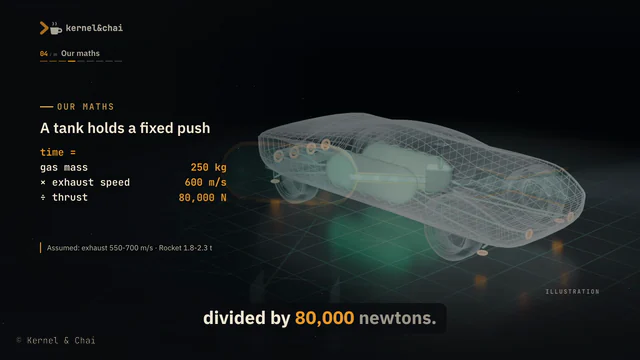
A tank holds a fixed amount of push: gas mass times exhaust speed. Divide by thrust and you get time. 250 kg × 550-700 m/s ÷ 80,000 N = 1.7-2.2 s. our estimate
Scroll to drain the tanks.
03 · try it
Do the maths yourself
Change the gas, the exhaust speed, the thrust or the car's weight. Hovering needs only the car's weight in thrust, so it lasts longer, and the car gets lighter as the gas leaves.
Tesla: about 250 kg in 600 L2
my assumption: 550-700 at sea level13
Tesla: over 80 kN, rear four1
my guess: 1,800-2,300 kg7
our estimate
At full thrust, the gas lasts
1.88s
Best-case hover
8.17scan't hover
Thrust is 4.1 times the car's weight, so it can hover, throttled down, until the gas runs out.
time = m × v ÷ F · hover = (v ÷ g) × ln(M ÷ (M − m)), only if F ≥ M × g · meters show 0-20 s
04 · the 5-6 s claim
Five seconds means a gentle push
InsideEVs reports that one charge lasts 5 to 6 seconds, for the Thrust version with its 200 L tank8 6 . Tesla's engineer calls it "one time" per run10 .
At Tesla's density, 200 L is about 83 kg of gas: 0.57-0.73 s at 80 kN. Stretched to 5-6 s, the push averages 7.6-11.7 kN, about a tenth. our estimate
That fits cold gas: as the tank empties, pressure and thrust fall13 .
05 · the refill
Seconds to empty, hours to fill
On stage, Musk said the car can recharge its air tank2 . Tesla's engineer described an outside high-pressure nitrogen supply9 : all 600 L takes 6 to 7 hours today, with a goal of about half an hour7 .
Squeezing 250 kg of gas back to about 380 bar2 takes at least 35 kWh, even with a perfect compressor. That would drive a Model 3 about 200 km14 . our estimate
06 · what counts as flying
The FAA's answer
"The Tesla vehicle does not meet the FAA definition of an aircraft."
FAA, to CBS News11
"We are literally talking about hopping."
Roger Connor, Smithsonian, to CNN12
Of three versions, only the Rocket leaves the ground6 , and it is not approved for public roads5 . First shown in 2017, production was promised for 2020; now Tesla says 20285 .
my verdict
Not a flying car. A jump-and-flip machine. Still, 0-60 mph in 0.81 s is 3.4 g on average. That is real engineering.
07 · how I built it
From a Blender scene to the video
Every 3D shot is an illustration I modelled and rendered myself. Four tools, one pipeline.
-
01Blender
Model and animate
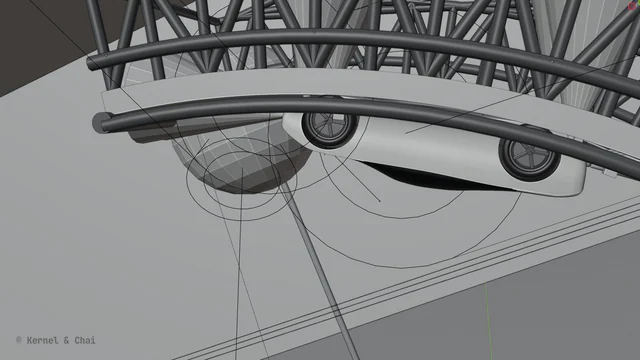
A generic two-seater, the ramp and the x-ray tanks, built with Python scripts. Solid view while I work.
-
02Cycles
Render
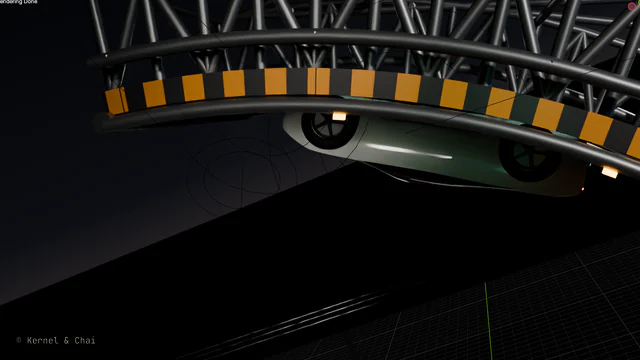
Path tracing on the GPU through Metal, on a MacBook Pro M5 Max. 30 frames a second.
-
03RIFE
Make it 60 fps
Practical-RIFE 4.25 (MIT) draws one in-between frame per pair. Rendered frames stay byte for byte.
-
04Remotion
Edit in code
React code lays the numbers, captions and source tags over the renders. The voice is AI.
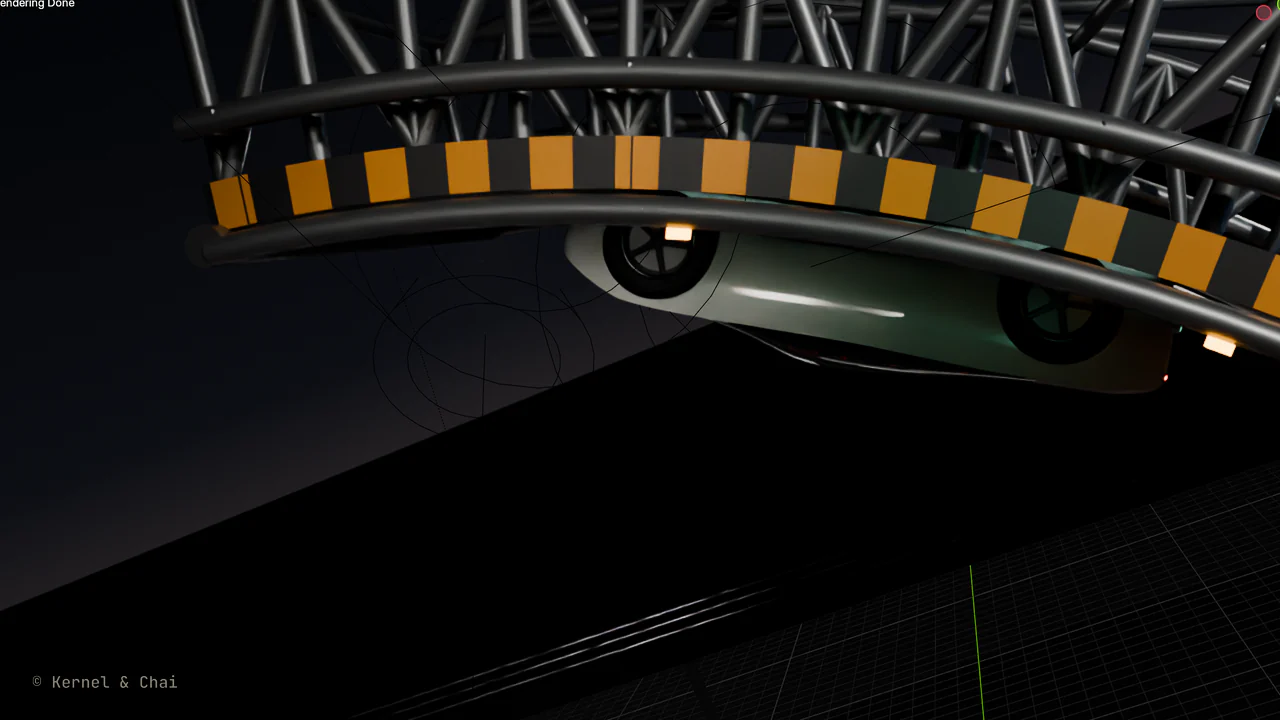
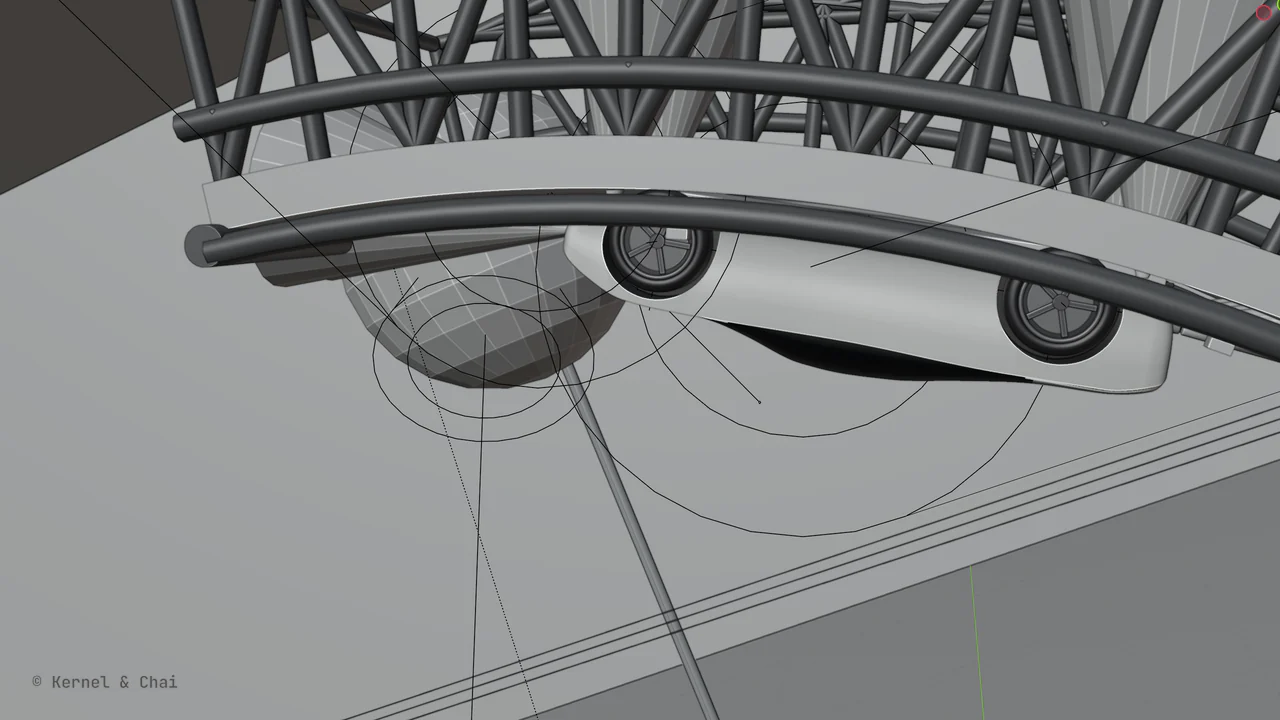
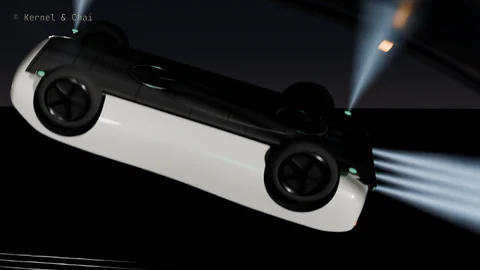 rendered, frame 120in-between, RIFE
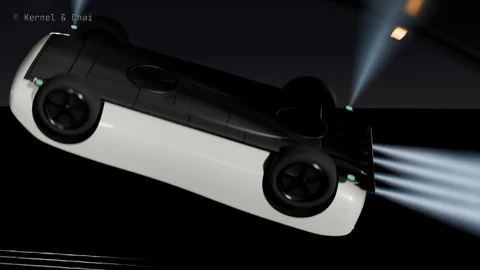 rendered, frame 121
08 · the video
Watch the video
2 minutes 47 seconds, seven chapters, every number on screen with its source.
Sources
Opened and checked on 21 Oct 2026. Each says which claim it supports.
-
Tesla (YouTube livestream) · 15 Oct 2026
Roadster Event (opens in a new tab)
Supports: The live demo; two tanks, 600 L, ten nozzles (12:11); "over 80 kilonewtons" from the four rear thrusters (18:08); 0-60 mph in 0.81 s (18:30); production in 2028 (21:12).
-
paultan.org · 16 Oct 2026 · Harvinder Sidhu
Supports: The two tanks "hold about 250 kg of air"; Musk: "The car can recharge its air tank."; a 5,500 psi (about 380 bar) "Thruster" readout in Tesla's photos.
-
TechCrunch · 15 Oct 2026 · Sean O'Kane
Tesla reveals SpaceX-powered Roadster that flies and falls with style (opens in a new tab)
Supports: The event outside Waco, Texas; the jump over five Tesla vehicles; 600 litres; ten thrusters; three versions; first shown in 2017.
-
Fox Business · 15 Oct 2026 · Landon Mion
Tesla's new Roadster makes a flying debut, hitting 60 MPH in under a second (opens in a new tab)
Supports: Fan suction held the car on the curved ramp until it was upside down; cold-gas thrusters launched it; it flipped and landed.
-
NBC News · 16 Oct 2026 · Chris Perez
Elon Musk shows off 'flying' Tesla Roadster after years of delays (opens in a new tab)
Supports: 27 ft in the air "according to Tesla"; 0.81 s; the Rocket version "is not approved for public roads"; first shown in 2017 with production promised for 2020, now 2028.
-
Hagerty (YouTube) · 16 Oct 2026 · Henry Catchpole with Lars Moravy
The FLYING Tesla Roadster explained by the man who engineered it (opens in a new tab)
Supports: Three versions; the Thrust version has four cold-gas thrusters and a 200 L nitrogen tank; the Rocket adds a 400 L tank and six thrusters and "is the version that can leave the ground" (video description).
-
TeslaNorth · 16 Oct 2026 · Sarah Lee-Jones
Supports: Weight ballpark "just under 1,700 kilos"; filling all 600 litres "takes 6 to 7 hours today, with a goal of about half an hour."
-
InsideEVs · 16 Oct 2026 · Iulian Dnistran
Supports: Thrust version, 200-litre tank: "One charge lasts roughly five to six seconds."
-
InsideEVs · 16 Oct 2026 · Andrei Nedelea
The Tesla Roadster's Thrusters Last Seconds. Refilling Takes Hours (opens in a new tab)
Supports: Moravy describes "an external high-pressure nitrogen supply"; two to six hours today, a 30-minute target.
-
Torque News · 17 Oct 2026 · Tinsae Aregay
Supports: Moravy on the thrusters: "It's one time" per run, about five seconds.
Note: Its opening line says "hydrogen"; the headline and body say nitrogen.
-
CBS News · 16 Oct 2026 · Kris Van Cleave
Supports: FAA: "The Tesla vehicle does not meet the FAA definition of an aircraft."
-
CNN · 15 Oct 2026 · Chris Isidore
Tesla unveils what it says is a flying car, called the Roadster (opens in a new tab)
Supports: Roger Connor, Smithsonian curator for vertical flight: "We are literally talking about hopping."
-
Wikipedia · accessed 21 Oct 2026
Cold gas thruster (opens in a new tab)
Supports: No combustion; as the gas is used, "the pressure decreases and maximum thrust decreases"; nitrogen specific impulse 73-80 s (vacuum), the basis for my 550-700 m/s sea-level assumption.
-
US EPA / DOE, fueleconomy.gov · accessed 21 Oct 2026
2026 Tesla Model 3, energy use (opens in a new tab)
Supports: 24-26 kWh per 100 miles (non-Performance versions), so 35 kWh drives about 217-235 km.
The 3D is illustration: my own generic car, rendered in Blender, not Tesla footage. Kernel & Chai is independent and not affiliated with Tesla, SpaceX or any company mentioned. Product names belong to their owners. Our renders, video and text are © Kernel & Chai, all rights reserved; see Rights.
the newsletter
One explainer a week.
The week's video, written out properly, with sources. Nothing else. Unsubscribe in one click.
Watch on YouTube ↗